
Complete processing, fermentation, filling and hygiene solutions
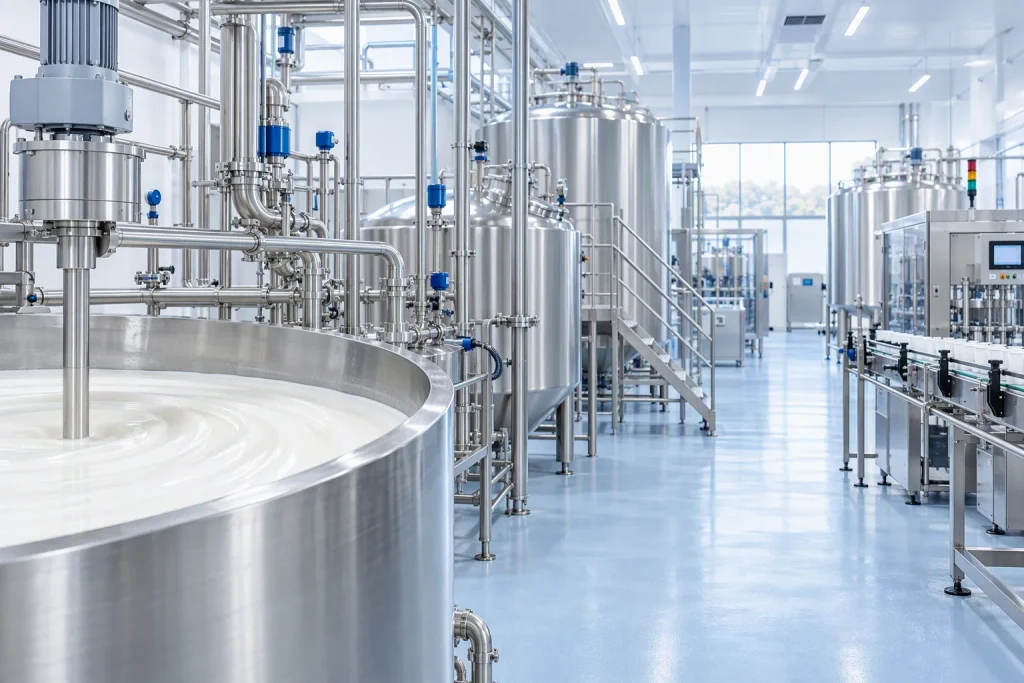
Designed for consistent product quality, hygienic operation and efficient scale-up, this catalogue outlines a modular yoghurt plant suitable for set, stirred, drinking and fruit yoghurt. Each line can be configured to suit the required recipe, pack format, automation level and production capacity.
Plant at a Glance
| Product range | Set, stirred, drinking, Greek-style and fruit yoghurt |
| Typical line scope | Milk reception through cold storage and packing |
| Construction | Food-grade stainless-steel product-contact parts |
| Control | Recipe-based temperature, time and process monitoring |
| Hygiene | Clean-in-place-ready circuits and sanitary connections |
| Configuration | Batch or continuous modules; manual to highly automated |
Milk Preparation & Fermentation
Milk Reception & Standardisation
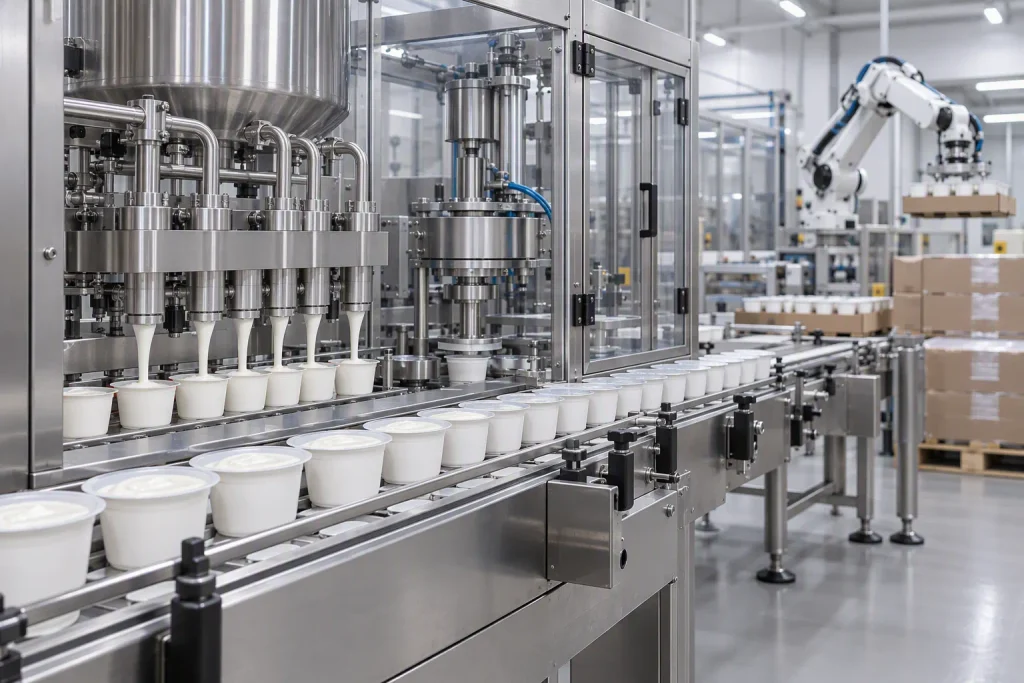
Balance tanks, filters, pumps and blending vessels receive the milk and support adjustment of fat, solids and stabilisers for a repeatable yoghurt base.
Pasteurisation & Homogenisation
A plate heat exchanger heats the mix to the selected process temperature, while homogenisation improves texture, stability and fat dispersion. Heat recovery can reduce utility demand.
Culture Dosing & Fermentation
Insulated fermentation tanks provide controlled agitation, temperature management and hygienic culture addition. The system supports recipe-controlled incubation and cooling.
Key features
- Sanitary product-contact surfaces and drainable pipework
- Accurate temperature and holding-time control
- Gentle agitation to protect product structure
- Optional fruit, flavour, sugar and stabiliser preparation modules
Filling & Packaging
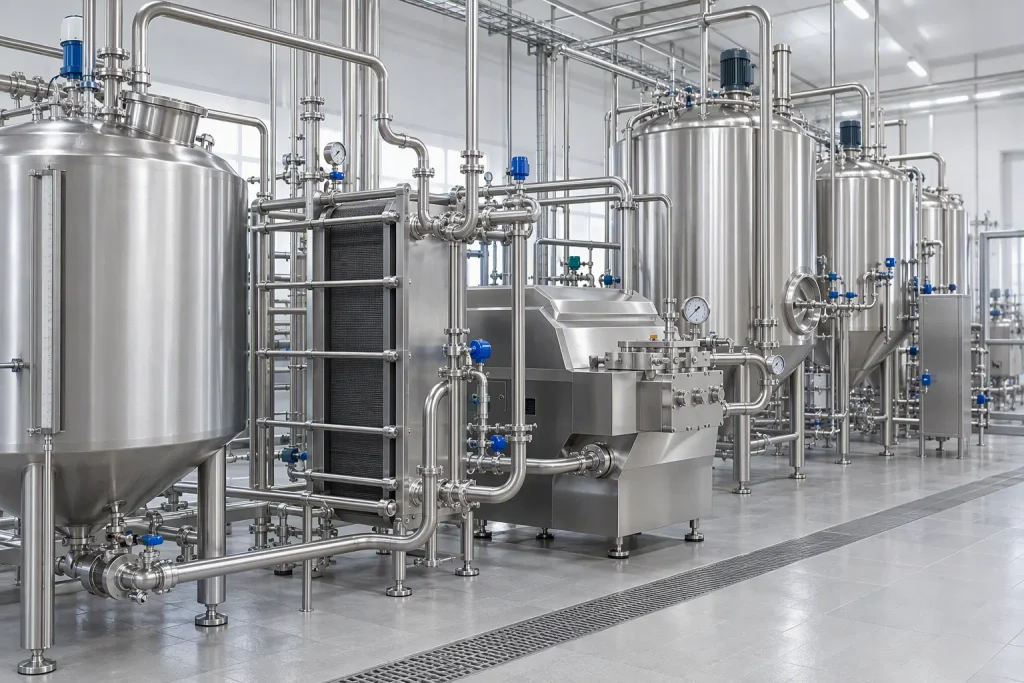
Automated filling systems portion yoghurt into cups, bottles, tubs or pouches, then seal, code and convey the packs for secondary packaging. Product pathways are designed for hygienic changeovers and accurate dosing.
Available modules
- Cup or bottle denesting and infeed
- Volumetric or mass-flow filling
- Fruit-on-the-bottom or blended-fruit dosing
- Foil sealing, lid application and date coding
- Checkweighing, metal detection and reject handling
- Case packing, palletising and cold-store transfer
Typical Process Flow
- Milk reception and filtration
- Standardisation and ingredient blending
- Preheating and homogenisation
- Pasteurisation and holding
- Cooling to inoculation temperature
- Starter culture addition and fermentation
- Cooling, optional fruit blending and buffer storage
- Filling, sealing, coding and packing
- Cold storage and dispatch
Utilities, Hygiene & Control
Utility package
Depending on the selected configuration, the plant can integrate hot water or steam, chilled water, compressed air, electrical distribution, water treatment and refrigeration.
Clean-in-place
A dedicated clean-in-place unit can circulate controlled caustic, acid, disinfectant and rinse stages through tanks, pasteurisers, fillers and product pipelines. Final cleaning programmes must be validated for the product, equipment and local requirements.
Automation
PLC-based controls can manage recipes, alarms, valve routing, temperatures, tank levels and production records. Optional data logging supports traceability and performance review.
Product Possibilities
| Product | Recommended configuration |
| Set yoghurt | In-pack incubation with controlled warm-room and cooling stages |
| Stirred yoghurt | Tank fermentation, gentle breaking, cooling and filling |
| Drinking yoghurt | Low-viscosity blending, smooth pumping and bottle filling |
| Fruit yoghurt | Fruit preparation and hygienic inline or tank blending |
| Greek-style yoghurt | Concentration by separator or membrane system, subject to recipe |
Project Specification
Final equipment sizes, heat treatment, fermentation profile, filling method and utility loads should be confirmed from the product recipe, target throughput, pack format, cleaning philosophy and applicable food-safety regulations.
Request a Proposal
For a tailored plant layout and commercial proposal, provide the required capacity, yoghurt types, daily operating hours, pack sizes, available utilities, automation preference and installation location.
Engineering support: process design • equipment selection • factory layout • installation • commissioning • operator training