
Concept Design: Sweetened Condensed Milk and Evaporated Milk Plant
A complete process, equipment, utilities, hygiene, quality and implementation concept for a flexible dual-product dairy facility
1. Executive Overview
This concept describes a hygienic, automated plant that receives raw or recombined milk and produces two shelf-stable product families on shared upstream equipment. The common line covers reception, clarification, separation, standardisation, preheating, homogenisation and vacuum evaporation. Product then follows one of two finishing routes: controlled sugar addition, cooling and lactose crystallisation for sweetened condensed milk; or heat stabilisation, filling and commercial sterilisation—or validated UHT and aseptic filling—for evaporated milk. Final capacity, recipes, temperatures, holding times and legal declarations must be confirmed by pilot trials, thermal-process validation, local regulators and the selected equipment suppliers.
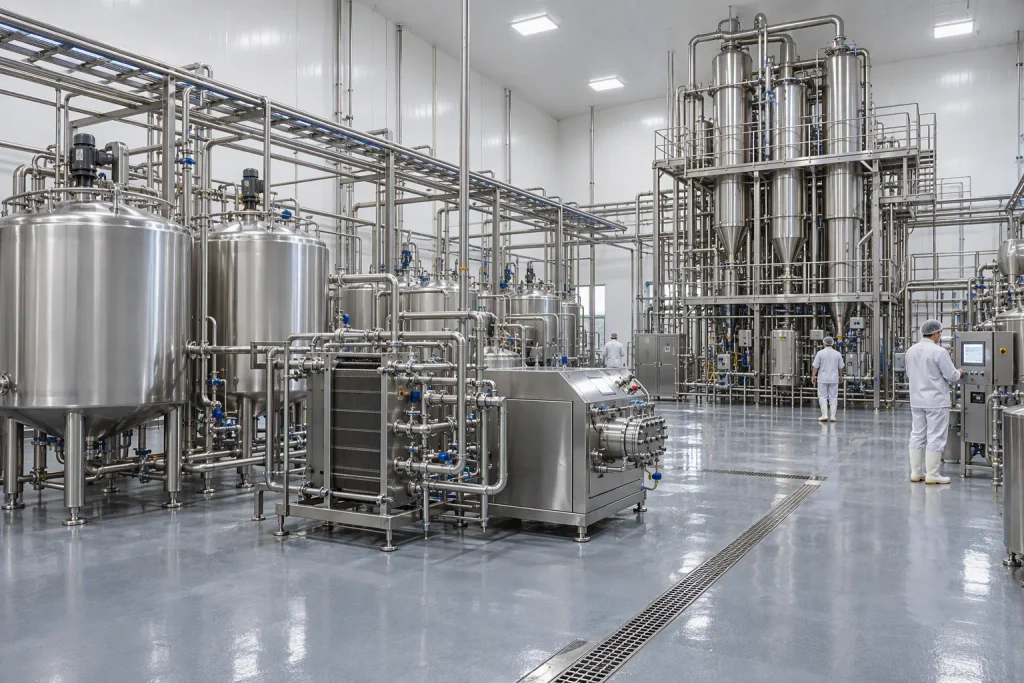
Figure 1. Concept visual of the shared milk-treatment and evaporation hall.
2. Design Basis and Product Targets
| Design item | Concept basis |
| Illustrative raw-milk intake | 100,000 L/day; scalable after market and mass-balance confirmation |
| Operating pattern | Two production shifts plus sanitation/maintenance window |
| Product routes | Sweetened condensed milk (SCM) and evaporated milk (EM) |
| Raw-material options | Fresh milk, or recombination from skim milk powder/milk fat/potable water where permitted |
| Typical packs | SCM: cans, squeeze packs or bulk containers; EM: cans or validated aseptic packs |
| Reference composition | Codex CXS 282: standard SCM minimum 8% milkfat and 28% milk solids. Codex CXS 281: standard EM minimum 7.5% milkfat and 25% milk solids. Confirm the chosen legal grade and local rules. |
| Food-safety system | HACCP-based controls, prerequisite programmes, traceability, allergen control, hygienic zoning and validated cleaning |
3. End-to-End Process
- Reception and testing. Tankers pass document, odour/appearance, temperature, acidity, density, fat/protein, antibiotic-residue and rapid microbiological checks before unloading through a sanitary filter or clarifier.
- Chilled storage. Accepted milk is metered into insulated agitated silos with level, temperature and traceability controls.
- Clarification, separation and standardisation. A centrifugal separator removes sediment and divides cream and skim milk. Automated blending sets fat and solids-not-fat to the product recipe.
- Preheating and heat treatment. Regenerative plate or tubular exchangers improve efficiency. The validated heat treatment reduces vegetative microorganisms, inactivates enzymes and conditions proteins for stability and viscosity.
- Homogenisation. One- or two-stage homogenisation reduces fat-globule size and limits creaming. Exact pressure and product temperature are recipe- and equipment-specific.
- Vacuum evaporation. A multi-effect falling-film evaporator removes water at reduced pressure, limiting thermal damage. Online density or refractive measurement controls concentration; TVR or MVR can reduce steam demand.
- Routing and finishing. Concentrate is directed to the SCM crystallisation route or the EM sterilisation/UHT route through segregated, cleanable valve manifolds.
3.1 Sweetened Condensed Milk Route
Prepare a filtered sugar syrup in a dedicated dissolver using potable water and controlled heating, then dose it accurately before or during evaporation according to the validated recipe. The sugar concentration in the aqueous phase is the principal preservation hurdle; Tetra Pak’s process guidance describes a narrow operating window of about 62.5–64.5%, while Codex requires the sugar level to be controlled by good manufacturing practice so it preserves the product without causing excess crystallisation. After the target total solids and viscosity are reached, cool the concentrate rapidly under agitation. Add fine lactose seed under controlled conditions so crystals remain small and the product does not become sandy. Mature in insulated crystallisation tanks, verify viscosity, solids and crystal size, then fill into clean containers and hermetically seal. This product is generally not retorted after filling; shelf stability depends on composition, hygiene, seal integrity and validated process control.
3.2 Evaporated Milk Route
Standardise the concentrate to the selected legal category and adjust heat stability only with permitted ingredients and validated dosing. Deaeration may be used to reduce dissolved oxygen. For the traditional route, cool to filling temperature, fill into cans, double-seam, wash, and sterilise the sealed containers in a retort using an authority-approved scheduled process; then cool, dry, inspect and incubate representative samples. An alternative is continuous UHT treatment followed by aseptic storage and aseptic filling. The two routes require different hazard controls and cannot share an unvalidated thermal schedule. Retort lethality, UHT conditions, container size, product viscosity and cold-spot behaviour must be established by a qualified thermal-process specialist.
4. Major Equipment Schedule
| Area | Principal equipment | Key design features |
| Milk reception | Weighbridge, sampling point, unloading pump, duplex filter/clarifier, flowmeter | Closed transfer, non-return protection, tanker traceability |
| Raw storage | Insulated silos and agitators | Chilled holding, independent high-level protection, cleanable vents |
| Standardisation | Separator, cream tank, standardisation skid | Automatic fat/solids control and mass-balance reconciliation |
| Heat treatment | Plate/tubular heat exchanger, holding tube, diversion valve | Recorded time-temperature control and fail-safe diversion |
| Concentration | Multi-effect falling-film evaporator, separator, condenser, vacuum system | Low residence time, anti-foaming design, online concentration control |
| SCM finishing | Sugar dissolver, syrup filter, dosing skid, vacuum cooler, crystallisers | Agitation without air entrainment, controlled lactose seeding |
| EM finishing | Stabiliser dosing, buffer tank, filler/seamer and retort; or UHT/aseptic system | Validated commercial sterility and container-closure control |
| Packaging | Container depalletiser/rinser, filler, seamer/capper, coder, checkweigher, metal detector where suitable, case packer and palletiser | Line clearance, reject verification, code and seal inspection |
| CIP | Multi-tank automated CIP station with supply/return pumps and chemical dosing | Separate circuits for raw, pasteurised, evaporator and filling systems |
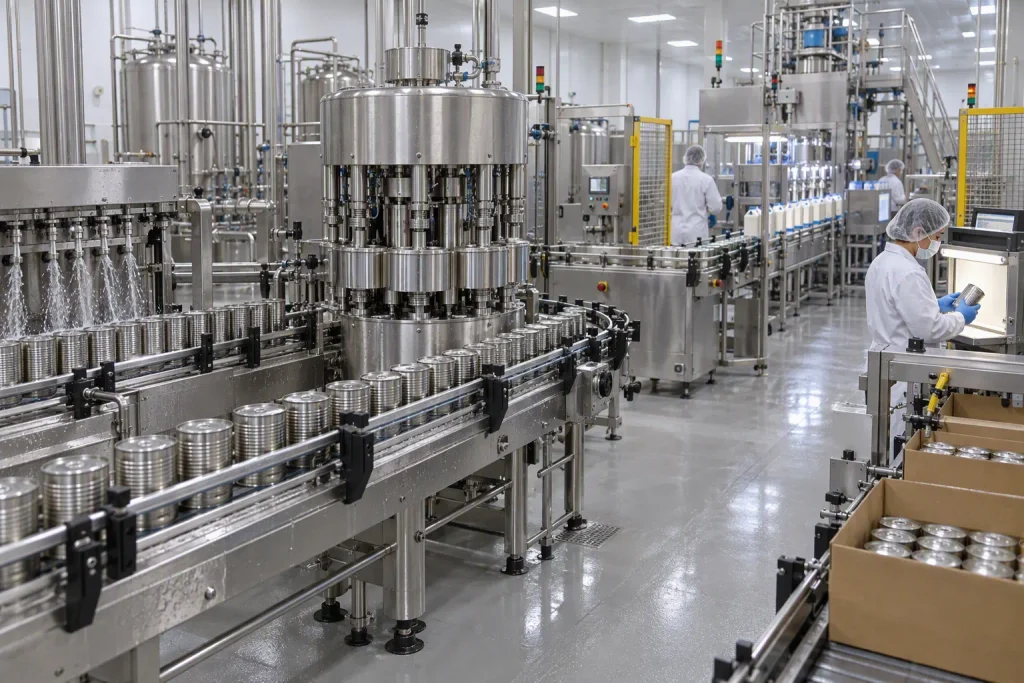
Figure 2. Concept visual of the filling, closure inspection and secondary-packaging hall.
5. Utilities, Buildings and Hygienic Layout
- Utilities: softened or demineralised boiler feedwater, culinary steam where in product contact, chilled water or glycol, cooling water, oil-free instrument air, food-grade compressed air at critical points, electricity with standby support for safe shutdown, potable process water, hot water and refrigeration.
- Energy efficiency: regenerative heating, condensate return, vapour recompression, evaporator condensate recovery where risk-assessed, variable-speed drives, insulated hot surfaces and heat recovery from refrigeration.
- Hygienic zoning: physically separate raw reception, pasteurised processing, high-hygiene filling, retort, dry packaging, chemical store, utilities, laboratory, workshops and welfare areas. Personnel and material flows should move from lower to higher hygiene without cross-over.
- Building fabric: washable walls and ceilings, sealed penetrations, coved junctions, slip-resistant floors graded to trapped drains, pest-proof openings, controlled ventilation and condensation prevention.
- Wastewater: segregate high-strength product losses from ordinary wash water; install screening, balancing, pH correction and an appropriate biological treatment stage. Prevent milk, sugar and CIP chemicals from being discharged as uncontrolled slugs.
6. Quality, Food Safety and Laboratory Plan
The HACCP study should be completed by the site team using the final recipe, equipment and law. Likely control points include raw-milk acceptance and antibiotic residues; validated heat treatment with automatic diversion; sugar concentration and water activity for SCM; retort lethality or UHT/aseptic integrity for EM; container closure; coding and traceability; and prevention of post-process contamination. The laboratory should support incoming-milk chemistry and residue screening, in-process fat/solids/pH/viscosity checks, lactose crystal assessment for SCM, heat-stability and sterility/incubation checks for EM, seam teardown or closure testing, environmental monitoring, and finished-product sensory and shelf-life programmes. Calibration, sampling plans, hold-and-release rules, non-conformance handling and recall exercises are required.
7. Automation, Staffing and Maintenance
Use a PLC/SCADA system with recipe control, electronic batch records, alarm management, trend displays, valve-route verification, CIP proof, mass balance and user access levels. A typical organisation includes production and packaging operators, shift supervision, quality and laboratory staff, maintenance technicians, utilities operators, warehouse/logistics staff, sanitation personnel and food-safety leadership. Final headcount depends on automation, pack mix and local working practices. Apply preventive and condition-based maintenance to separators, homogenisers, evaporator pumps, vacuum systems, fillers, seamers, retorts, refrigeration and boilers; keep critical seals, instruments, valves and drive components as strategic spares.
8. Commissioning and Validation
- Freeze user requirements, product specifications, packaging formats and legal standards.
- Complete mass/energy balances, process and instrumentation diagrams, hygienic design review, HAZOP, utility sizing and factory layout.
- Perform factory and site acceptance testing; verify materials, weld quality, instrument calibration and safety interlocks.
- Commission water, steam, refrigeration, air, power, CIP and wastewater systems before product introduction.
- Validate cleaning, pasteurisation, retort or UHT process, aseptic boundary where applicable, sugar concentration, crystallisation, filling accuracy and seal integrity.
- Run capability batches for every recipe and pack size; establish shelf life using microbiological, chemical, physical and sensory evidence.
- Train operators and maintenance teams, issue standard operating procedures, and complete regulatory approval before commercial release.
9. Implementation Notes and References
Next engineering inputs: required daily output by product and pack size; raw-milk composition and seasonal variation; fresh versus recombined milk strategy; site location and utility tariffs; local dairy, pressure-vessel, boiler, environmental and building rules; target shelf life; preferred container; automation level; and available plot dimensions. Equipment ratings, installed cost and operating cost should not be fixed until these inputs and supplier guarantees are available.
Technical reference points: Codex CXS 282-1971, Standard for Sweetened Condensed Milk; Codex CXS 281-1971, Standard for Evaporated Milks; Tetra Pak Dairy Processing Handbook, Chapter 17, Condensed Milk; and GEA guidance on dairy evaporation plants. These references support the product definitions, indicative composition and major process stages; the final design must also comply with the requirements of the country where the plant will operate.